Showing posts with label Climate. Show all posts

Saturday, February 26, 2022

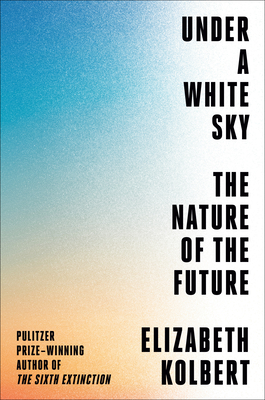
Under a White Sky: The Nature of the Future by Elizabeth Kolbert

I read the first 3 chapters and thought to myself, "This should be a Netflix series." And so I sent Elizabeth Kolbert a message on Twitter, and she responded! Exciting! 

That's besides the point, which is that this book is one the examines a small handful of very interesting topics, and Kolbert intertwines their relevance back to the impacts of climate change and man's defiance of nature. Take a singular natural occurrence, understand it's evolution over time - how's it changed / adapted / grown / shrunk / morphed - and you'll find that we've unknowingly and unconsciously altered that instance's course of existence. And then once we've learned that we've altered it, we try to reverse engineer the process to revert it back to old - what we think it should have been. 

As humans, we've become skilled at deviating a natural path, trying to course-correct it, but impacting other natural processes simultaneously. All this to say that while we think we can control the uncontrollable, the only thing we're really doing is harming ourselves in the process. 

Kolbert makes it so easy to visualize and comprehend that these seemingly inconsequential issues are just a sampling of the global damage occurring on a daily basis, some with a butterfly effect. 


Check it out on GoodReads. 

Buy it on Amazon. 


Thursday, December 31, 2020

The Uninhabitable Earth: Life After Warming by David Wallace-Wells

The dangers of climate change are coming sooner than you think. If you're reading this post right now, you'll probably still be alive when some of the worst imaginable things could come to fruition. Come on, you've already felt the affects. Don't be naive. Just accept the fact that it's coming. But do your best to contribute to mitigating the factors.

Climate change will impact every aspect of our lives. It will distort the pictures in our minds of a world that once was, and stories told to our children will seem fairy-tale-like. 

This book, The Uninhabitable Earth: Life After Warming, is a flavor for what's to come. It might seem extreme and the numbers may come off as hyperbole, but make no mistake, if we continue on the path we are on, life could be a living nightmare. 


Check it out on GoodReads.

Buy it on Amazon.

Sunday, August 30, 2020

Solar Energy: My Financial Logic is at War With My Conscience

Tesla Solar Panels


Over the past few years, solar energy has interested me to the point where I asked that our house be built to enhance the support for future solar panels on the roof. My personal financial investments have also revolved around renewable energy. And so I've recently looked into having solar panels installed on our home. In my opinion, it's not yet inexpensive from a financial standpoint. 

But from the perspective of climate change and the health of our environment, it's probably invaluable at this point. 

Here's the high level overview and some of my thoughts: 

  • One of the first things that people interested in solar look into is the Investment Tax Credit (ITC). Despite the fact that solar hasn't been so widely adopted yet, the credit seems to be already phasing out. The credit comes as a tax benefit and is computed based on the initial cost of the system. You get the full credit in year one. As you can see, residential customers have less than 3 years to get any kind of credit for adopting solar. I hope that there is a renewal of the incentives. 
    • 2016 – 2019: The tax credit remains at 30 percent of the cost of the system.
    • 2020: Owners of new residential and commercial solar can deduct 26 percent of the cost of the system from their taxes.
    • 2021: Owners of new residential and commercial solar can deduct 22 percent of the cost of the system from their taxes.
    • 2022 onwards: Owners of new commercial solar energy systems can deduct 10 percent of the cost of the system from their taxes. There is no federal credit for residential solar energy systems.

  • Solar panels have a life of somewhere between 20-25 years. But they have practically no maintenance, other than maybe having to spray them down with water to remove any bird droppings. 

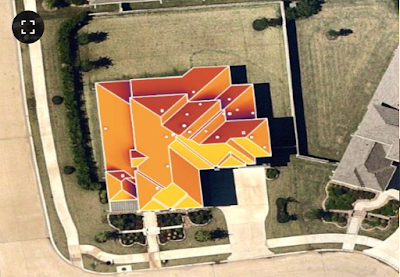
  • The ability to capture enough sunlight depends on the orientation of your house, how much sun you receive, whether or not you have trees or adjacent buildings creating shade, the slope of your roof, and the surface area of roof you have to add panels to. 


    Southward facing home with 46 solar panels
     
    Heat map - yellow = most exposure = most efficient; dark orange = least exposure = lease efficient


  • Some solar companies can only build you a system that does not exceed 10% of your power utilization. They use the previous year's energy bill and consumption in kilowatt hours as a guide. 
    • I take issue with this because the older your home gets, the less efficient it is. Additionally, if you had problems with energy consumption in the past year, your data may not be as accurate. A system built today may not be appropriate for your usage in 5 / 10 / 15 years. 

  • Unless you live on a farm or out in the middle of no where, you have to remain connected to the energy grid. A battery is really only good for storing energy in case the power goes out. I learned that if there is a power outage, because you are still connected to the utility and the solar power feeds the utility lines automatically, if there is a power outage, the solar system shuts down automatically. So there's not really an option to be living a battery-powered life. In any event, a single battery costs about $9-15k. So tack that on to the cost of your system. And likely, you will need more than 1 battery if your home exceeds a certain size. 

  • The cost of the system itself depends on the amount of energy you will need to create and the amount of space that you have to lay out solar panels to create and store that energy. In general, the bigger the house, the more energy consumed, the more panel you will need. 
In our case, we averaged somewhere in the range of 1500-2000 kilowatt hours of consumption over the past year which ranged in cost from $175 to $225 per month. The solar panels necessary to run our home at this rate would cost us about $36,000 for the panels alone, and that's paying it up front (not a loan) and getting the 26% federal tax credit (which comes when you file your tax return). So the cost of cash out the door on day one is really +/- $48,000 and then you have to wait to get your credit when you file your tax return. If I added a single battery, the cost would be an additional $12,000; two batteries would cost $19,000 (both before tax credit). 

There are other options that the solar companies offer. The one that draws the most attention is the $0 due at signing / no cost today. Essentially what happens is you can finance the cost of your system over 10 or 20 years. The interest they charge is 2.99% for 10 or 4.99% for 20 years. And you, instead, have a monthly payment to make to the solar company rather than the utility. So you end up paying more, obviously. The $36,000 system will cost roughly $44,000 by the time you're done paying it off.

My first issue with this is if I wanted to finance the cost of my solar panels, the better option would be to take out a home equity loan or borrow against my home. With interest rates so low these days, I'd get a better deal that way. 

My second issue with financing is if you choose the longer option at 20 years to avail of a lower monthly payment, by the time you're done paying for the system you've reached nearly the end of the life of the panels. By that time, you'll have to replace panels or worse yet replace the entire system. Have you really saved any money then? Or are you just breaking even? 

Also note: solar panels are not a home improvement. They are considered tangible personal property and not a fixture of the house. That being said, they do not improve the value (financially) of your home. In fact, if you wanted to take the solar panels with you to your next home, in theory, you could. But solar companies still advertise that having a solar system will increase the value of your home. I suppose it could, if the buyer of your home was willing to purchase the panels from you, but they could easily say they love the house but not the panels and have you remove them before you sell. In which case, you've got to shell out the money to have them taken down, and then there's no guarantee that they'll fit on the new home you're moving into. 

My problem now is one that's moral and ecological. While I know that becoming self-sufficient from an energy perspective will help the environment and that installing these panels would be doing our part in "saving" the world, my financial logic is at war with my conscience. I cannot justify the cost mathematically. The cost vs. (financial) benefit is about even. But the (financial) cost vs. (climate change) benefit is heavily in favor of adopting a solar energy system. 

Have any of you gone down this decision path? If so, please feel free to share your insights. And if I've gotten anything wrong up there, please help me understand so that I can correct my thinking. Many thanks! 

Wednesday, August 26, 2020

OPINION: COVID-19 the Climate Changer

While I was reading a book published in 2014 about climate change, it re-occurred to me that COVID-19 is mother nature's way of combating climate change on her own. This isn't the first time I've thought this.

There's a section that describes the tug of war between capitalism and the economy versus the efforts of climate change experts and environmentalists. My understanding is that the ideals of each side are contrary to each other, making their efforts inversely related. 

With COVID-19, although it's a health issue, the impacts to capitalism and the environment are both positive, actually. How so? 

In terms of capitalism, the stock market (not that it's a great indicator or all encompassing) is booming. There is significant unemployment currently, but I think it's a stepping stone towards future sustainable growth and development. The housing markets affected by low interest rates are great for buyers and sellers can profit from the demand. Construction continues to build and improve in growing areas. And despite small business failures due to health restrictions, I believe they will rebound because those who suffer and survive will learn and grow. 

In terms of the environment, the reduction of daily commutes, daily flights, and the constant movement of floating waste factories has all been minimized. Pollution on a grand scale has been reduced significantly. More people are working in their yards due to travel restrictions and boredom. Less people are driving daily. More people are growing their gardens for the same reasons. There's more time to tend to these basic things now that the economy is on temporary hold. 

In a way, COVID-19 is a climate changer in itself. It's changing the climate of capitalism. And it's helping to change the actual climate of the world. Looking at the positives rather than the negatives, COVID has been helpful. Some will say that it's at the expense of others' well-being and health, and I agree. It's tragic and sad. And I feel terrible for those who are suffering and being challenged physically and mentally. Everyday we hear about these things and it doesn't change the somber mood, but hey, I'm trying to look at it from a different angle. 

Thursday, December 14, 2017

That's One Small Step Climate Change, and One Giant Leap For ME And Our HOA


It's a small step in the right direction, but every little bit counts.

Today I was informed by a board member of the Home Owners Association (HOA) that the board voted to have a new dumpster situated in our complex to recycle plastics!  To be accurate, they will be replacing the cardboard dumpster with a cardboard/plastics dumpster, presumably with a divider to segregate the two recyclables.

I'm pleased to hear this because I requested that this initiative be taken back in September. It took a couple of follow-up emails, but I'm glad that we're moving forward on the issue of recycling and doing our part to save the environment.

Wednesday, September 20, 2017

WE SHOULD HAVE Paid More Attention Before, But It's NOT TOO LATE Now - Make An IMPACT

Where have I been all these years? I'm so far behind in my personal education of climate change. I've been trapped in an office building helping businesses save money on taxes without any real care for the damage being done daily to our environment. I've let years pass and taken for granted the environment we live. I've been disconnected from the reality of global warming and climate change...until now.


I've recently started to read Hot, Flat, and Crowded: Why We Need a Green Revolution--and How It Can Renew America a book by Thomas Friedman (originally published in 2008) and watched Al Gore's first movie, An Inconvenient Truth, first released in 2006. In both mediums, indisputable scientific evidence is simply conveyed to the audience on the effects of global warming and it's shocking.

What the human race and industrialized nations (particularly the United States) have done to contribute to the global dilemma is exponentially worse than the measures taken to counteract the imbalance. The naysayers and deniers can not and should not continue to ignore the now numerous elephants in the room.

In the wake of recent Hurricanes Harvey and Irma, now Jose and Maria, it is not difficult to see the real effects of climate change and global warming. And it is scary. In fact, it really hits home for me when I see the affect that climate change has on places that I've been to or still must visit. And sadly, I may not get to places before climate change takes it toll. Places like Antarctica where recently a huge ice shelf broke off (sooner than expected) and Greenland where scientists are seeing one of the largest ice sheets melt away are just examples of places that will never be the same because of the drastic changes to the globally important landscape. And the effects of these changes are global.


And for the place we call home, America, more specifically New York City, the possibility of rising ocean levels could be catastrophic. This video imagines the effects. It might be fiction for now, but might become a reality if more isn't done to help the greatest cause that man has ever created.

Until now, I've subconsciously been doing little things: recycling, managing my thermostat, used compact fluorescent lightbulbs, use mass transit / public transportation. But now I'm making more a conscious effort to do better.

We've been doing our part in reducing our carbon emissions by:

  • walking or biking to as many places as possible, reducing the amount of time our car runs burning fossil fuels
  • telecommute for work
  • eating organic
  • eating a low carbon diet (less meat, more chicken / vegetables)
  • planted our own herbs (vegetables are next)
  • hang drying clothes
  • and informing you all, my subscribers and readers, to do your part in helping curb global warming and reducing the effects of climate change


What have YOU done to make an impact? If you need some ideas take a look at this website. And here's one for your kids provided by NASA. 

And check / calculate your carbon footprint here. Globally we're at a whopping 405ppm, which is staggering considering CO2 levels have been sub-300ppm  (for 650,000 years) previous to 1950 when it started to skyrocket. 


I'm planning to watch Al Gore's newest release, An Inconvenient Sequel: Truth to Power  to get an updated view on what he and his team have tracked over the past 11 years. And then I'm going to look into getting one of these. But in the meantime, I will continue to be #climateconscious and take steps in the proper direction.