Showing posts with label Health. Show all posts

Sunday, February 21, 2021

A Reflection On My Life Through A Busy Season: When The Thick Gets Thin

I've learned a lot about myself over the past few weeks. It has been a very challenging time for me. I'd say that it's primarily work-related, but it's spilled over into my personal life. At this point in the pandemic, what hasn't, right? 

My cognitive abilities diminish at a certain point when stress / busyness / tiredness are paramount. 

I am easily agitated by people who don't care, don't respond, are slow to communicate, or have no consideration for the pressures I may be under. Granted, not everyone will know my situation, but those who do should have more empathy. 

I get into my feelings when I can't let my frustrations out. That's probably why I'm writing this blog post. I have no real outlet. I don't have a therapist. I don't want to inundate my wife with my issues. And I am not finding enough time to take walks or workout the stress. 

But why? Is it because I care too much about what I do? Maybe.

Part of my frustration is that I know I'm capable of doing things, understanding difficult concepts, breaking things down, creating examples for myself, and working through issues. But with little time to be spent, I'm finding that I don't feel intelligent. I feel like I'm slow or not comprehending. I even act like I don't know what to do, work-wise. That's not me under less stressful circumstances. But to others whom I interact with when I'm at this point, I will seem incapable, slow, and they may even question why I'm in the role I'm in. 

As I've gotten older, the impact has become more pronounced. I can feel it hit harder. When I was in my early 20s and working in public accounting, I could suck it up and plow right through whatever came my way. Whatever obstacle there was, however late I had to work, regardless of how much toll it was taking on my body - I just carried on and let it become normal. As young professionals, you're "paying your dues" but at what expense? Mind? Body? It's tough, but it's "normal" for this career path. 

I sometimes question if my actions and reactions are valid or acceptable. And other times, I don't care what anyone else thinks because it's healthy to get these thoughts and feelings out of our systems, right?

There are some who would say that it's just a job and that your health and mindfulness should be at the forefront. I agree with that... up until I get really busy. Then all bets are off. And that's not a good thing. I've had a hard time holding myself accountable for sticking to plans and enforcing my own hardlines. Guess they're not that hard, huh? 

I often second guess myself when I get to this point of stress and frustration. I am no longer confident in the things that I do. 

I become mechanical instead of dynamic and conscious. I do just to do rather think about what the impacts are. In some ways, there's nothing else you can do. Your learning and abilities to comprehend are stunted by inundation. In accounting and tax, this happens often, especially in client service roles. This is why people stop learning. It's why people give up. When you become overly concerned with timeline and due dates, functioning becomes a matter of just doing and not thinking. 

Everyone is different. I can tolerate a lot of stress, but even I reach a breaking point. Others may have less of a threshold and may collapse upon the pressures sooner. That doesn't mean they are not intelligent or have other star qualities. 

I have learned my limits once again at a different time in age. I am no longer capable of grinding it out because I feel all the adverse effects quicker. My mind and body fail me sooner. And my overall well-being is just significantly deteriorated. I am sad, tired, stressed, and need a break for the quiet, calm, and serenity - maybe in the mountains somewhere...

Paro Taktsang (aka Tiger's Nest) - Paro Valley, Paro District, Bhutan - circa April 2017


Thursday, May 3, 2018

Where Did Spring Go?


I used to have really bad Spring-time allergies. Watery, itchy, swollen eyes. Stuffy / runny nose. Constant sneezing. If you’ve got allergies, you know what I’m talking about.

Strangely, I have not suffered from the itchy eyes recently. Although, I have been sneezing a good amount and blowing my nose constantly. So I have some symptoms of the pollen-driven reactions, but not all of those I’m used to experiencing.

I narrowed it down to 4 possible reasons.
  1. After LASIK eye surgery, the laser must have burned off the ability to sense irritation in my eyes. 
  2. I have spent so much time outdoors and being exposed to different environments that my body, eyes specifically, has developed an immunity to the irritants. 

  3. My mostly organic diet has improved my resistance to pollen allergies. Specifically, my consistent daily intake of carrots has strengthened my eyes in more ways than one. 
  4. Climate change is real. Spring no longer exists or has been severely curtailed. Pollen is not as abundant in the environment, leading to less plant life that would normally absorb the CO2, in effect allowing greenhouse gases to grow in the atmosphere, leading to global warming. 

Or maybe all of the above.

What do you think?


Monday, March 5, 2018

Update: Walk For Health

...and the environment!

On alternate days of the week, I have continued to walk to the gym. Yes, I'm still doing that. And yes, even through the winter. I'm always prepared to trudge through the cold, wind, rain, and sometimes snow. I just layer up and protect my otherwise exposed skin. I walk the 1.1 miles in 15 minutes, workout for an hour or so, and then walk the 1.1 miles back.

Here's a breakdown of just my walking to/from the gym for the past 9 months:

  • June - December 
    • 4x per week = 8.8 miles per week = 35.2 miles per month = 246.4 miles
  • January - February 
    • 3x per week = 6.6 miles per week = 26.4 miles per month = 52.8 miles
  • TOTAL = 299.2 miles
I've lost 1 gym day per week due to the studying I've been doing. Not bad for just walking to/from the gym! 

And according to the carbon footprint calculator I would have emitted 0.11 metric tons of CO2 had I driven the 300 miles. That's like releasing 242.5lbs of CO2 into the atmosphere. So not only do I continue to benefit my health, but I've also continue to consciously help the environment around me. 

Have you been doing your part? 

Saturday, February 24, 2018

ERROR! 502: BAD GATEWAY

Memory = Storage | Mine is either corrupt, overloaded, or error prone.

My memory is awful! I've been researching way to help improve my memory. And these are some of the things I've found:
  • Meditate
  • Exercise
  • Drink coffee
  • Get more sleep
  • Eat more berries
  • Chew gum
  • Eat more fish / take fish oil
  • Listen to music - (ie. Mozart)
My mind on a daily basis

Sunday, December 10, 2017

Is There A Way To Encourage Healthy Eating (and Living)? - The Shock Of A Lifetime


Is there a way to flip the pricing / cost of healthy and non-healthy food to make the good stuff cheaper and the bad stuff more expensive so that we can eat healthier without worrying about cost?

It's a matter of supply and demand, I know. But will we ever get to the point where the demand for healthy, organic foods is greater than the demand for over-salted or high sugar content processed foods? Or will the supply for good-for-you food ever surpass the supply of off-the-shelf, ready-to-eat packaged goods? 

I have no idea really, but I'd hope that something drastic happens in my lifetime.

Here's an example of something that bothers the heck out of me.

Strawberries.

Amazon Fresh has 1 pound of regular strawberries for $3.99, while they carry organic strawberries for $5.99. You have to pay a $2 premium to eat better quality food.


I think it would take an enormous one-time shock to the systems (financial / economic / agricultural, etc.) for anything to change.

There has to be a way. So what if, for example, organic fruits and vegetables were produced in mass and the price could be driven as low as other non-organic fruits and vegetables? Then in theory, the demand for organics could potentially be what non-organics are currently. At the onset, obviously, the supply wouldn't be enough to feed the masses. But after a potential spike in cost until farmers could supply the demand, prices would come back down to affordable, reasonable levels. 

Or what if farmers just stopped producing non-organic fruits and vegetables all together? What if everything was organic? Again, it would be a temporary shock but the end result would be what I'm looking for. Mass produced, organic fruits and vegetables at inorganic prices.

Regular bagels
Whole Wheat bagels
Stepping away from the organic / inorganic conversation, how about just making a decision between healthier options of the same product? Let's take breakfast for example.

Bagels. If you're from the Northeast, you know this is a staple breakfast item. Whether you buy it from your local bagel store, a street vendor, or your local grocery it rarely disappoints.

For a 6-count package of Thomas' plain bagels on Amazon, you would need to pay $3.49. Add some Philadelphia Cream Cheese, a regular 8oz tub, and that's another $2.99. All together, that's $6.48. But if you so happened to be in a healthier mood and wanted to trim some fat and eat whole grains, your option would likely be for Thomas' 100% Whole Wheat bagels and the 1/3 less fat version of cream cheese. A 6-count would be $4.94 and the 8oz tub is an additional $4.39. The total comes to a staggering $9.33. That's a premium of $2.85 to eat a marginally healthier meal (see the nutrition labels). 


Regular cream cheese
1/3 less fat
What about McDonalds? Let's take a look at 2 sandwiches that they offer and compare the relative healthiness and cost. The All-American Double Cheeseburger versus the Artisan Grilled Chicken Sandwich. We all know that chicken is leaner; grilling is better than frying; white meat is better than red meat. The chicken sandwich sits on McDonald's menu at a price of $4.39, while the double cheeseburger is a value-meal at a measly $1.69! 

And take a look at these nutrition facts. Clearly the Artisan Grilled Chicken is a better choice for health purposes. But of course, it's at a premium. 

Artisan Grilled Chicken Nutrition Facts

Double Cheeseburger Nutrition Facts

Alternatives to regular, unhealthy food are the key to a healthy living. But healthy options are, unfortunately, more expensive in the marketplace. When good food becomes the primary sustenance, the cost relationship should flip. 

Sadly, I find this predicament true of not just the food industry but also the energy industry (alternative / renewable energy > fossil fuel). There are plenty of other situations, industries, and products where the current "alternatives" are better for people and the environment but are more expensive than regular products. Clearly, we need change. 

If we really wanted to encourage healthy eating, we'd find a way to make it cheaper and require less cost-benefit thought. Good food should be a no-brainer. But how can we make alternatives the primaries? 

Maybe like the heart attack that jolts a man to changing his poor eating and healthcare habits from bad to good, a sudden shock to our financial, economic, and agricultural systems is all we need to drive a healthier lifestyle going forward. 

Thursday, December 7, 2017

Can't Crack The Habit

My knuckles are becoming more and more uncrackable. My neck is sore and also uncrackable. My back constantly needs stretching and may crack occasionally but feels right often. I need to stop cracking my jaw or else I fear I’ll have a hard time chewing in the future. My body is deteriorating and I need to do better to prevent any further long-lasting damage. I’m slowly torturing myself. If I had only listened to people who advised against the cracking or knuckles and other body parts, I may not be in so much discomfort today. I promise to not allow my child(ren) to take up this ugly habit. It’s so hard to break.

If only I could crack this habit as easily as my knuckles...

Thursday, November 9, 2017

Relax - The Right Pair of Hands Will Fix That

Massages work wonders!

It's not often that I get a massage, but when I do I thoroughly enjoy them. Tonight was one of those times. And I never get anything less than 90 minutes anymore. The one-hour sessions I used to settle for just never seemed to be enough for me; my body was always craving more attention. What your body craves is what you should give it. Just like the proper nutrition and exercise, the right amount of massaging will do you good.

And despite that previous statement, I am not a monthly goer. I do not have a membership at any of the local therapy locations. On the rare occasions I crave a massage, I use my wife's membership and as a guest, I get my fix. The privilege allows the member pricing for the guest, and it's worth it because although I could go every month, but it's just not a financially practical activity for me. For my wife who needs it more than I do, the membership is one of the best recurring expenses she has for herself. Happy wife, happy life... right?

I used to be afraid to strip down to my underwear and lay on the table, but a seasoned patient knows that it's the easiest way to allow the massage therapist do their job. No need to roll up or fold shorts, and less material in the way for when a proper masseuse stretches you in directions you had no idea your body could contort.  And those are some of the best motions that you can be put through.

I love the typical massage. Knead my body as much as you can. Poke and prod my muscles until the knots let up. But give me good stretch, and I feel like that goes a long way and the pleasure is longer lived.

Some people find a way to sleep from the comfort that their session put them in. But for me, my massages require active participation. My therapist has me take deep breaths that help her get at muscles and pin points that are exposed by the muscle expansion and contraction. I talk with my therapist throughout to let her know more or less pressure, if it feels good or bad, and to concentrate on a particular area.

On the flip side, she requires me to respond to her queries as well. She tells me when she feels an area of tension or a knot. She speaks anatomically about why I feel something or what is causing the issue. She offers correction to my daily posture or physical health. And she tells me when she's going to potentially hurt me in the process, but that it's a required evil to smooth out the muscle that's overly stressed / tense.

It's a great experience every time. The only thing I don't look forward to about a massage is finding a new therapist, if and when that time comes. Therapists are like doctors. If you find a good one, you should hang on to her as long as possible because the better she knows your body, the better able she is to fix your sore parts.


Have you made an appointment recently? (537)

Thursday, October 26, 2017

Step Master & The Environment

We've been home from our travels abroad for nearly 5 months now. Since then, I've gone to the gym on average 4 times per week. The gym is approximately 1.1 miles away. That being said, I've walked just about 176 miles in the past 20 weeks. And that's just going to the gym. If I include all my other walks, randomly around the neighborhood, to/from the park and basketball court, to/from the grocery store, and to/from my cousin's house then I've most likely broken 200 miles. I only drove to the gym once because it was raining.

How does that compare to someone who walks 10,000 steps each day? Well, according to The Walking Site, there are on average 2,000 steps in a mile. So 10,000 would be 5 miles. If you walked 5 miles per day, 5 days a week, then over the past 5 months you should have accumulated 500 miles or 1,000,000 steps!

Keep in mind, the 200 miles I've racked up is just from walking alone. That doesn't include the running on the treadmill, climbing the stair master, cycling, and other exercises that count towards that 10,000 steps per day goal. Nor does it include any other strenuous activity like playing basketball, biking within an 8 mile radius, or other sports.

The 200 miles of simply walking to the gym and other nearby errands / places is 40% of the pie already. Do I achieve the other 60% from all the other activities combined? I have to believe that I do.


In addition to the health benefits that I'm reaping, I've saved money on gas, wear and tear on our car, and most importantly reduced my carbon footprint and emissions. The carbon footprint calculator estimated that 0.07 metric tons of carbon would have been emitted had I driven the 200 miles instead of walked. It might be small, but every little bit of help the environment can get is worth it. And it only cost me 30 minutes per day.

How much walking have you done for your health and the environment? (346)


(Flashback to that time we made it to Mt. Everest Base Camp)
(Time: 14 days | Max Altitude: 17,602ft / 5365m after 9 days | O2: 50% less than sea level | 80 miles round-trip)

Tuesday, October 24, 2017

Keep Calm And Save A Life

Have you ever saved anyone's life?

I don't know or understand what it is with life and death situations that makes your instincts so sensitive and your reactions so sharp. When you know something isn't right or there's potential for danger, your senses just perk up and you remain unbelievably alert until the uncomfortable feelings subside.

I like to say I know. And I like to claim that I've saved a few lives in my own lifetime. But there was nothing heroic in the things I did. It was more common sense and reaction. The real heroes are the medical professionals that revive or resuscitate the nearly departed.

Sometimes I wonder. Is it because I grew up in a medical family? Is it because I'm a preventative person by nature and anticipate accidents and try to avoid them like the plague? Could it be because I sometimes play out scenes in my mind and how to assist, resolve, or avoid the dangers? Most likely it's because of all of the above. Much of it has to do with preparation.

I have. At least I like to think that I have. More than once, if you're wondering.

In one scenario it was as simple as screaming "be careful" as loud as I could. It drew the attention of a speeding bicyclist down a hill in the dark of an SUV that was about to make a turn into the street he was flying down. It also helped that the SUV's windows were open which probably made my yelp audible enough for the driver to wait a split second and jam on the brakes. Otherwise, it wouldn't have been a pretty sight. Maybe it was luck that I was walking the dog on a very unusual route that night.

In another case, my cousin was saved from hypothermia. We were on vacation and went for a swim in the cold waters off the coast of Bar Harbor, Maine one late summer. While most of us were fine, she came out of the water and we noticed her lips were turning blue / purple. And almost as immediate as we noticed it, her body went limp and fell to the sand. Both of her parents are doctors. But I suppose when it comes to treating your own family the mind is sometimes paralyzed by the shock that something dangerous is happening to your most loved one. Long story short, my instinct was to pick her up, and rush her to an area where she could be tended to by medical staff. This required carrying her off the sandy beach, up an enormous flight of stairs, and near the park's ranger station. The EMT's did the rest from there. I was fairly young at the time, maybe a teenager? But it was quick thinking without panic that I think really helped the most.

Most recently (2 years ago), my dad lost consciousness while he was sick with flu-like symptoms. Luckily I was there to catch him because otherwise, he would have cracked his head open on the kitchen tile. In that situation, the most important thing to do was lay him down completely so that the blood and oxygen could return to his brain and other organs to prevent severe damage. The paramedics did the rest on their arrival, eventually taking him to the hospital to be monitored.

And a long time ago, also when I was younger, my grandfather suffered from low blood sugar if I recall correctly. He was laying in bed and I remember his face hardening and turning blue. The only thing I could do at the time was call 9-1-1. Indirectly, I saved him.

My brother also had some strange "attack" when he was bouncing on my uncle's knee as a really young kid. He was having so much fun until all of a sudden he just stopped breathing. My uncle panicked. I called my mom at work. She's a nurse. Her panic made her come home immediately, but the emergency personnel made it to our house before she did, so they took care of the issue. So maybe I didn't exactly save his life, but it was that instinct again that made me call for help.

There was one other situation with a work colleague, but that still perplexes me. Our team came together to help him in his distress, but I think he may still not realize it. Hopefully he does one day.

Have you saved a life?

The only advice I can give is to stay calm. Quickly analyze the situation and call for help immediately. If you are not a medical professional, stabilize the person (lay or sit him/her down) and keep them calm as well (if they are conscious) until help arrives.

I may not have directly saved anyone's life, but the simple actions are sometimes the biggest factors. The most dangerous thing is non-action. Don't be paralyzed by fear. (826)

I never got one of these. This is all I ask for the next time I save a life. 


Tuesday, October 3, 2017

It Wasn't Really Cheese, Was It?

If you're like me, then growing up as a kid one of the most staple foods to eat was grilled cheese. We made them at home. The sandwiches were served in school for lunch. And it was a comfort food. Pair it with tomato soup. Or stick a few pieces of bacon in there. And make sure there was plenty of butter on the bread to make it oh so savory.

But now as an adult who is looking towards clean eating to improve my life and health, I'm looking back at my poor food choices as a kid, teen, and young adult. In this particular instance, I'm looking at cheese. And more specifically, Kraft Singles. You know, the packaged processed cheese that was individually sliced with uniformity and enveloped by a plastic sheet with ease of opening.

It wasn't really cheese, was it?  A quick look at the ingredient list would confirm. Real cheese at the very base of it all is made up for 4 basic ingredients. But Kraft Singles seem to have more than a handful of other ingredients that probably help keep its shelf life, give it color, and texture. All together it's less natural than the numerous varieties of cheese available around the world.


But why would we subject ourselves to this false food? It's easy. Like many other processed items, this processed cheese was cheap. It was popularized by mass production, the cost reducing factor; the fact that they were so uniform and standardized was supposed to suggest high quality as well. And for a long time, the public really bought into this, literally. I have to imagine that Kraft sold an unthinkable amount of this product to millions / trillions of people over time. And sadly, I was a consumer for the longest time.

In more recent times, I'm happy to see the realization and movement towards eating real cheese. It comes as part of the concern of eating healthy. Knowing what your food is made of, learning what the affects are on your body's intake, and making conscious decisions of what to eat has shed so much light on the reality of processed foods, including cheese.

I'm proud to say that I gave up processed cheese and Kraft Singles nearly 3 years ago. When I do have a cheese craving, I only have real cheese. It is so much more flavorful and healthy. I thought it might be difficult to give up the simplicity of the packaged cheese, but I've found ways to replace it. I like cheese for the creamy texture it adds to sandwiches. That's what I used it for mostly. But now, I have swapped the cheese out for either fresh organic hummus or guacamole to fill that creamy void.  I don't think I've even had a grilled cheese sandwich in the longest time. Probably all the better for me to stay healthy.

It makes me wonder, has Kraft reduced its output over the years and lost as many consumers for their cheese as I imagine they should? (509)

Sunday, October 1, 2017

Doctors Visits For The Low-Income, Less Educated, & Elderly Is Filled With Discontent

I grew up in a family that is amazingly full of healthcare professionals. If you walked through a family party you could bounce off a doctor or nurse or therapist like a pinball at any given pass. And as far as I know, they've all led great careers in helping, saving, and providing care to numerous patients. It's easy to tell how much they care about their jobs and the lives they affect because of the way they speak about their experiences, the love that their co-workers have for them, and appreciation their patients and their families exude towards these professionals. They are generally happy to be care givers and it shows.

I say all this as a background for what I'm about to rant about. I'm prefacing my disposition with this information because I don't want you to get the wrong idea about me. I am not intent on generalizing the entire industry, but highlighting unfortunate circumstances created by a select few.

I believe there are some underperforming doctors and doctor's offices who, sadly, seemingly don't care about providing good healthcare for all of their patients. In my opinion, they are in it for the money from the insurance companies. That's a bold statement. How could I say such a thing?

Have you ever been for a doctor's visit and spent more time in the waiting room than in front of the doctor? Have you ever made a list of questions for yourself to ask the doctor but felt so rushed that you forgot to ask something? Did you ever feel as if a doctor or nurse wasn't hearing your ailments but instead, jumping to a conclusion before you could spit out all the issues? I could not count on my hands the number of times I've lived through these experiences. I specifically feel as if the target are the elderly or the less educated.

Case and point, I help my mother-in-law (MIL) manage her medical visits. I do everything from setup the appointments to driving her to the offices to speaking with the doctors and nurses to having her medications filled at the pharmacy. I deal with a number of people along the way. I speak to the medical secretary, the nurse, the nurse practitioner, the doctor, the pharmacist, the techs, the lab, and anyone else I have to so that I can ensure that all the proper procedures are followed, visits are organized, and scripts are executed.


She's my MIL, so as you may have guessed, she's elderly. And in this case, she is also not as well educated as her children nor is she as fluent an English speaker as she could be. Every single time I take her for a visit, this is what I experience.

  • We are forced to wait in the waiting room for hours. In some cases, we may make the very first appointment for the day, and end up waiting for the doctors to even show up to the office. 
  • Once we get into the exam room, the nurses have no idea what the visit is for. They have not read the chart or the reason for the appointment. They revisit the list of medications and ailments, and on a number of occasions this information is not even correct and needs to be updated. 
  • When the doctor comes into the room, it's as if he didn't read the chart nor did a nurse give him an update prior to him entering. We start over. 
  • Then before we can complete our sentences about what the visit is for, he/she has already come up with a conclusion as to how we need to proceed. They advise X and Y with a side of Z. Take 2 of these, pick up your fries at the counter, and come back in 2 weeks. 
Without fail, this is the order of operations for a given appointment for my MIL. And believe me, I've complained about the process. I've corrected every error. I even need to slow the doctor or nurse practitioner down in their tracks. I ask questions and I clarify things that my mother-in-law does not have the capability to do either because she didn't understand the medical jargon, they spoke too fast, or because she just couldn't think to ask or clarify in the brief moments before the doctor said "see you next time." And if it wasn't for me slowing them down, I could see the advantage for doctors would take of my MIL. How so? 

The easiest way for doctors to make money is from insurance companies. In order to bill the insurance companies, a patient has to physically visit them. Simple as that. For any of the low income or elderly patients, I have to imagine that the doctors are in-the-money. In other words, they can't lose. 

If I wasn't around, they'd be getting multiple visits from my MIL. Each visit would go just as the previous (quick and unresolving), and each time the doctor would make a collection from the insurance company. And the more patients the doctors can treat in this fashion, the more money they can collect. So doctors are incentivized to move quickly. 

Let's just say for example, an average doctor's visit should be 15 minutes (actually face to face). For every hour they work, they would see 4 patients and in the course of an 8 hour day, 32 patients. BUT if they cut the time spent with each of their patients to 10 minutes, they can effectively see 40 patients a day. That's 8 more people than they should, but what dollar amount does that translate to? If you know anything about how much healthcare costs, you know that they made a pretty good chunk of change for saving a measly 5 minutes per patient. 

But what did the patient get out of it? Obviously they didn't receive the full potential of care. They were shorted 5 minutes. That 5 minutes could have been 2 or 3 questions that could change the course of their visits. Those patients were short-changed the amount of good information they could have been educated with. They were rushed or felt rushed and could not properly understand everything being discussed. They forgot the important things that needed to be heeded. They weren't given the time to clarify. And most importantly, they couldn't even reason with themselves to determine if the doctor was accurate in his estimations and findings. 
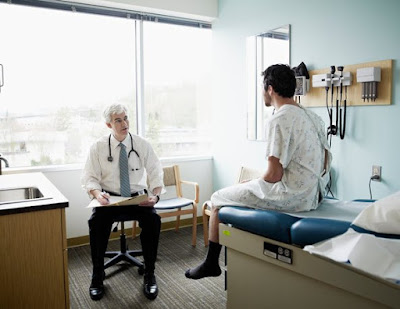
How many people take their elderly parents or low-income relatives or less educated friends / family to the doctor to ensure they're getting the proper treatment? I would bet not many. Because we are not their keepers. Because we think they can do it on their own. Because our parents think they are still capable of managing on their own. But there is a point in time where they start to miss things. Where they lose track of the important aspects of their visits. Where time is no longer on their side. They need help. 

And I believe doctors and doctors offices take advantage of this. If there was no insurance companies, I think doctors and other healthcare practitioners would provide better care and take more time for their patients well-being. Even if they charged a high hourly rate direct to the consumer, at least the onus would be on the patient to properly ascertain medical care with experts willing and able to do the right thing. 

If I could analogize it to the work of an accountant or lawyers, I'd give this example. Accountants and lawyers charge their clients on an hourly basis. They scope out the work to determine how long it would take and give their clients an idea of how much time is necessary. Clients then decide whether or not to engage the service provider. But when they do, clients know that these professionals are going to give them their best work and make sure that all realms of the scoped (and sometimes the out-of-scope) jobs are executed with the best interest of the clients in mind. 

If doctors took this route, I feel as if both the doctors and patients would mutually benefit. Doctors would be paid their just due, and patients would receive the best care possible.

So what am I asking for? Doctors - Take your time. Have some patience with your patients. Listen to what they have to say and answer their questions. Make sure they understand everything you explain to them. Give them the best care, the care that they deserve. (1428)