Showing posts with label Learning. Show all posts

Sunday, August 30, 2020

Solar Energy: My Financial Logic is at War With My Conscience

Tesla Solar Panels


Over the past few years, solar energy has interested me to the point where I asked that our house be built to enhance the support for future solar panels on the roof. My personal financial investments have also revolved around renewable energy. And so I've recently looked into having solar panels installed on our home. In my opinion, it's not yet inexpensive from a financial standpoint. 

But from the perspective of climate change and the health of our environment, it's probably invaluable at this point. 

Here's the high level overview and some of my thoughts: 

  • One of the first things that people interested in solar look into is the Investment Tax Credit (ITC). Despite the fact that solar hasn't been so widely adopted yet, the credit seems to be already phasing out. The credit comes as a tax benefit and is computed based on the initial cost of the system. You get the full credit in year one. As you can see, residential customers have less than 3 years to get any kind of credit for adopting solar. I hope that there is a renewal of the incentives. 
    • 2016 – 2019: The tax credit remains at 30 percent of the cost of the system.
    • 2020: Owners of new residential and commercial solar can deduct 26 percent of the cost of the system from their taxes.
    • 2021: Owners of new residential and commercial solar can deduct 22 percent of the cost of the system from their taxes.
    • 2022 onwards: Owners of new commercial solar energy systems can deduct 10 percent of the cost of the system from their taxes. There is no federal credit for residential solar energy systems.

  • Solar panels have a life of somewhere between 20-25 years. But they have practically no maintenance, other than maybe having to spray them down with water to remove any bird droppings. 

  • The ability to capture enough sunlight depends on the orientation of your house, how much sun you receive, whether or not you have trees or adjacent buildings creating shade, the slope of your roof, and the surface area of roof you have to add panels to. 


    Southward facing home with 46 solar panels
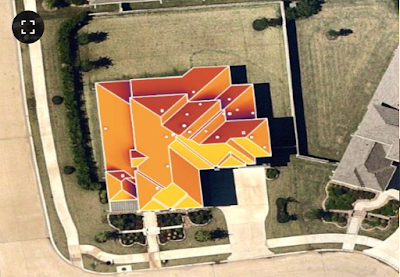
     
    Heat map - yellow = most exposure = most efficient; dark orange = least exposure = lease efficient


  • Some solar companies can only build you a system that does not exceed 10% of your power utilization. They use the previous year's energy bill and consumption in kilowatt hours as a guide. 
    • I take issue with this because the older your home gets, the less efficient it is. Additionally, if you had problems with energy consumption in the past year, your data may not be as accurate. A system built today may not be appropriate for your usage in 5 / 10 / 15 years. 

  • Unless you live on a farm or out in the middle of no where, you have to remain connected to the energy grid. A battery is really only good for storing energy in case the power goes out. I learned that if there is a power outage, because you are still connected to the utility and the solar power feeds the utility lines automatically, if there is a power outage, the solar system shuts down automatically. So there's not really an option to be living a battery-powered life. In any event, a single battery costs about $9-15k. So tack that on to the cost of your system. And likely, you will need more than 1 battery if your home exceeds a certain size. 

  • The cost of the system itself depends on the amount of energy you will need to create and the amount of space that you have to lay out solar panels to create and store that energy. In general, the bigger the house, the more energy consumed, the more panel you will need. 
In our case, we averaged somewhere in the range of 1500-2000 kilowatt hours of consumption over the past year which ranged in cost from $175 to $225 per month. The solar panels necessary to run our home at this rate would cost us about $36,000 for the panels alone, and that's paying it up front (not a loan) and getting the 26% federal tax credit (which comes when you file your tax return). So the cost of cash out the door on day one is really +/- $48,000 and then you have to wait to get your credit when you file your tax return. If I added a single battery, the cost would be an additional $12,000; two batteries would cost $19,000 (both before tax credit). 

There are other options that the solar companies offer. The one that draws the most attention is the $0 due at signing / no cost today. Essentially what happens is you can finance the cost of your system over 10 or 20 years. The interest they charge is 2.99% for 10 or 4.99% for 20 years. And you, instead, have a monthly payment to make to the solar company rather than the utility. So you end up paying more, obviously. The $36,000 system will cost roughly $44,000 by the time you're done paying it off.

My first issue with this is if I wanted to finance the cost of my solar panels, the better option would be to take out a home equity loan or borrow against my home. With interest rates so low these days, I'd get a better deal that way. 

My second issue with financing is if you choose the longer option at 20 years to avail of a lower monthly payment, by the time you're done paying for the system you've reached nearly the end of the life of the panels. By that time, you'll have to replace panels or worse yet replace the entire system. Have you really saved any money then? Or are you just breaking even? 

Also note: solar panels are not a home improvement. They are considered tangible personal property and not a fixture of the house. That being said, they do not improve the value (financially) of your home. In fact, if you wanted to take the solar panels with you to your next home, in theory, you could. But solar companies still advertise that having a solar system will increase the value of your home. I suppose it could, if the buyer of your home was willing to purchase the panels from you, but they could easily say they love the house but not the panels and have you remove them before you sell. In which case, you've got to shell out the money to have them taken down, and then there's no guarantee that they'll fit on the new home you're moving into. 

My problem now is one that's moral and ecological. While I know that becoming self-sufficient from an energy perspective will help the environment and that installing these panels would be doing our part in "saving" the world, my financial logic is at war with my conscience. I cannot justify the cost mathematically. The cost vs. (financial) benefit is about even. But the (financial) cost vs. (climate change) benefit is heavily in favor of adopting a solar energy system. 

Have any of you gone down this decision path? If so, please feel free to share your insights. And if I've gotten anything wrong up there, please help me understand so that I can correct my thinking. Many thanks! 

Wednesday, August 26, 2020

Fear, Not; Courage is Action

"I learned that courage was not the absence of fear, but the triumph over it. I felt fear more times than I can remember, but I hid it behind a mask of boldness. The brave man is not he who does not feel afraid, but he who conquers that fear." - Nelson Mandela


"Courage is not the absence of fear, but the ability to act despite it." - Desmond Tutu

Friday, August 21, 2020

The Possibility of Practicing Multiple Religions?

"Can you / should you practice more than 1 religion at a time?"

I formulated this question when I was about 75% of the way through reading The Art of Happiness by the Dalai Lama XIV and Howard Cutler. As we all may have learned throughout our lives, there are so many intersections between different faiths as well as science. A logical, capitalistic man would pick and choose the best of all worlds and try to combine all the practices to yield the best lifetime results. 

But just as soon as I developed this thought, I was almost seemingly divinely answered by the Dalai Lama himself.

. 

The part that refutes the notion of practicing more than one religion is the necessity to become immersed and develop a "deep feeling, making them part of one's inner experience." Can you truly incorporate and draw from the depths of multiple religious views? Not even God himself (or Allah or Buddha, etc.) had that ability. So maybe it's best not to even try. 

Wednesday, August 19, 2020

The Art of Happiness by Dalai Lama XIV and Howard C. Cutler

I wish this book was actually written by the Dalai Lama. In fact, it was written by Howard Cutler based on his interviews with the Dalai Lama. So in a way, it's a little bit misleading.

I suppose that not enough people get any kind of interaction with the Dalai Lama, so we should be "happy" with what we get. Cutler seems to have done the best job he could with the limited time with His Holiness. But to me it just wasn't satisfying. 

In picking up this book, I had hoped to read so much more by the Dalai Lama. I was hoping to be more inspired. I was hoping to have deeper appreciation and understanding. And it's not that I didn't get any of this, it's that I was being greedy in thinking that I'd get more. 

The Dalai Lama's teachings are on the surface pretty basic. But it's in the application of "the art" that is deep and difficult. So many of the simple things he says and that Cutler makes note of could be discussed for hours, days, months, years! And one's personal achievement in happiness could take equally as long. 

I did pull some good things from this book as you've seen in my previous posts. And I respect even just the attempt to put into words what a lifelong journey towards enlightenment has to offer. 

I think what I've taken most from this read is that happiness comes most from the simplicity in life. To achieve happiness, start with what you can control and remove from your life the stress and fear that comes from what you cannot control. 


Check it out on GoodReads. 

Buy it on Amazon.
 

Tuesday, August 18, 2020

Positive Change

The Art of Happiness by Dalai Lama XIV

Reading this passage, I immediately connected to my own experience. I've never described the process I went through mentally when I decided to earn my CPA, study for it, and pass the exam. But this really sums it up so well, and the proof that the process works is my certification. 

Learning and Education - from the numerous mistakes I've made to the various people I've witnessed and the number of insights I've gained, I learned the hard way. To further success in the field of Accounting, having a CPA, understanding the details of GAAP / Tax / Audit / Business, and using that education could only help me.

Conviction - I formally and firmly declared to myself that change was necessary. And that change was that I needed to be certified in my chose profession.

Determination - for successful people, failure drives determination. Decide to avoid failure, and success is within reach. Every day I was set on passing the exam. Everyday I wanted to improve. 

Action - I looked at ways to improve memory. I tested different diets to help give me energy. I started to drink coffee. I began to chew gum in an effort to correlate muscle memory with studying. I changed the time of day I would study. I changed the order of topics I would study. I modified my mindset. Every action improved my results. 

Effort - without effort, I'd be a failure in my objective. Without effort, I would have made no change. Without effort, I'd have been stuck. Without effort the results may have been depression. But my efforts created suffering in the short term, happiness in the long term. Like a basketball player who goes to practice, the efforts get reflected in the results. 

This 5 step process worked for me. I'm sure it will work for you too.

Thursday, July 30, 2020

Tao Te Ching: A New English Version by Lao Tzu

It's hard to refute any of the ideas that Lao Tzu, regarded as the found of Taoism, has to offer. Every page is quotable. Every saying has balance. His teachings emphasize the art of doing without doing. If Lao Tzu's teachings were scientific, they'd be the equivalent of Newton's 3rd Law - for every action there is an equal and opposite reaction. 

Regardless of what faith you have or religion you follow, this book and the teachings contained herein can be applied to our everyday lives. All it takes is some introspection, observation, and dedication to balance.

A version, not a translation, by Stephen Mitchell. That's an important distinction.


Check it out on GoodReads.

Buy it on Amazon.


Here's an excerpt that I enjoyed: 


Wednesday, July 29, 2020

Become Like Water My Friend


Tao Te Ching by Lao Tzu - a version by Stephen Mitchell

This reminds me so much of the Bruce Lee quote:
“You must be shapeless, formless, like water. When you pour water in a cup, it becomes the cup. When you pour water in a bottle, it becomes the bottle. When you pour water in a teapot, it becomes the teapot. Water can drip and it can crash. Become like water my friend.”
 He must have studied Lao Tzu, and is clearly a master of the Tao.


Thursday, June 4, 2020

What are we talking about? Practice?

"Practice makes perfect!"

You hear it all the time, but it's yet another quote that I have disagreements with. But let me be clear, I'm not saying we shouldn't practice. We should practice as much as possible. But, does practice makes perfect? NO.

Practice makes each person who practices better at their craft. Better at understanding. Better at listening. Better at adjusting and adapting. Better at negotiating and navigating. Better at producing. Better. It just makes you better. Because no one is perfect.

Think about it. Doctors have a practice. Lawyers have a practice. Advisors are practitioners.

Are they perfect? NO. They have a practice because every patient they examine, every client they take, every consultation they sit for makes them better. They continue to educate themselves about the world around them. Their intake improves their output and that improves their next round. Have doctors fixed every medical issue they've encountered? No. Have lawyers won every case? No. Are advisors always right? No.

They practice to become better, not to become perfect.

Can greatness still be achieved? YES. But greatness is different from perfection. 


Wednesday, June 3, 2020

Daring Greatly by Brené Brown

"Daring greatly is not about winning or losing. It's about courage. In a world where scarcity and shame dominate and feeling afraid has become second nature, vulnerability is subversive. Uncomfortable. It's even a little dangerous at times. And, without question, putting ourselves out there means there's a far greater risk of feeling hurt. But as I look back on my own life, and what Daring Greatly has meant to me, I can honestly say that nothing is as uncomfortable, dangerous, and hurtful as believing that I'm standing on the outside of my life looking in and wondering what it would be like if I had the courage to show up and let myself be seen." - Brené Brown

Vulnerability is an allowance. It's when you allow others to see your true self. Sadly, in our society, it's perceived as a weakness because of the reaction one might have to a specific type of response sometimes received, shaming. To me, vulnerability is part of communication. It's being fearless in the face of what other's might think of your M.O. But because of our society, being vulnerable is daring greatly. Whereas without the whole shaming aspect, the term vulnerability would not even exist and it would just be plain old communication - sharing your truest self with others. 

But this is the way our world has evolved. So we must dare greatly to overcome those who make us feel shame. We must take risks and venture chance that our fears will not manifest. And we have to learn that being vulnerable is the way develop courage, become positive, remain radically candid and gritty, and live proud of who we are internally and externally. 


Check it out on GoodReads

Buy it on Amazon

Monday, June 1, 2020

Man's Search For Meaning by Viktor Frankl

"One should not search for an abstract meaning of life. Everyone has his own specific vocation or mission in life to carry out a concrete assignment which demands fulfillment. Therein he cannot be replaced, nor can his life be repeated. Thus, everyone's task is as unique as is his specific opportunity to implement it.

Ultimately, man should not ask what the meaning of his life is, but rather he must recognize that it is he who is asked. In a word, each man is questioned by life; and he can only answer to life an answering for his own life; to life he can only respond by being responsible. Thus, logotherapy sees in responsibleness the very essence of human existence." - Viktor Frankl

For now and for the future, I believe I’ve found a meaning in my life - one of many I'm sure. I’ve looked back, and this is something that I enjoy doing consistently. I’ve been doing this all these years already. And I don't foresee any change to this M.O.

I like to teach. I like the share what I know, what I’ve learned, how and why anything is the way it is. I like to give my opinion and share facts.

I remember thinking on multiple occasions throughout my life that I'd enjoy being a teacher. I think realistically that's not the career path for me. But I already consider myself somewhat of a "teacher." Whomever I have the opportunity to educate or share ideas/facts/opinions with may already be learning from me. I will also never stop being a student. Perpetual learning is something that I've always believed in, regardless of age. And in my own education, I can pass that along as a "teacher" for others. Knowledge, like communication, is a two-way street.

My recent ponderings have stemmed from finishing this book, and so I'm sharing:


"According to logotherapy, we can discover this meaning in life in three different ways: (1) by creating a work or doing a deed; (2) by experiencing something or encountering someone; and (3) by the attitude we take toward unavoidable suffering."

Have you given thought to the meaning of your life?


Check it out on GoodReads.com

Buy it on Amazon

Sunday, May 31, 2020

The Maldives of Saudi Arabia

Umluj. No one has ever heard of it. Until now...

That's me in the water. That's me in the sun light, losing my inhibition. 

Located in the Tabuk region of the Kingdom of Saudi Arabia (KSA), Umluj is a situated on the northern third of the Saudi coast of the Red Sea. The closest airport is 150km south in Yanbu, an hour and 45 minutes away by car on a coastal route - the road was clean and straight as an arrow. Just watch out for the camel crossings.

Umluj is a place that wasn't easy to research or learn about, but now we know why. At the time we were there (mid-November 2019), Umluj was just like any other town in KSA. In fact it's like any other sleepy seaside village. It has it's local shops of all sorts and it has it's devout Muslims. There are no heavily trafficked tourist sites. There are no hotel chains. There are no resorts. There are no tour buses or many tour guides. There are no touts. Everyday life here is plain tameez. But what you don't see right away are the hidden beauties and the potential that this region has to offer.

You might be asking yourself, "then why did you visit this area of the country if it doesn't have anything to offer now and you know nothing of the town and vicinity?"

For one, we're travelers. We like the off-the-beaten-path places. We want to pave the way, not always follow the herds. Secondly, we stumbled upon some very obscure blogs and really random Instagram posts of people who had no real following.  We read about and saw pictures that proclaimed Umluj to be the Maldives of Saudi Arabia! That's a bold statement. But that was enough to convince us that the trip to Umluj would be worth the time and effort to get here.

As we arrived in town, we wondered what we were going to do here. As we drove through, we did NOT see any of what was depicted in the blogs or Instagram posts. We didn't see tourists or well-lit establishments. We drove down the coastal road, but we were unimpressed. We saw uninhabited beaches with Jersey shore colored sand and murky waters. We couldn't even find our hotel, which online had fantastic pictures of a room and a notable location close to the water. Our first thoughts were that we had made a mistake. Had we been fooled by internet marketing and fake Instagrams posts and blogs?!

But we finally found our hotel after a few circles around the neighborhood. The Shada Collection Mina Hotel, now called Juman Hotel, is a reflection of Umluj. The facade is unassuming; there are no flashy signs or decorations. The windows are tinted black to keep the heat of the sun out of the lobby. But when you step inside to the cooled air of the clean hotel, you are most welcomed by the casually clothed attendant whose English is immediately challenged by the sight of your foreign face. That's Umluj. It's casual, hospitable, and welcoming despite not having much outward attraction. What's beautiful is what's hidden and longing to be found.

Because of the lack of any kind of foreign tourism (they've got some local tourism), English is still a distant second language to the local people. But here we were, a challenge in the face of what we would later learn to be a place destined to grow into a future tourist haven.


We took dinner on our first of three nights here at a local fish market where, due to language barrier, we had to point at our fish in the beds of ice and like a game of charades had to figure out how they were going to cook it, serve it, and what was included in our order. Let's just say the food was so good we went back on the second night and became friends with the owner, in a non-communicative way. But you could see the joy in his face when he saw us again. We're not easily forgotten in a small town. For sure we were the only tourists in town, and we stood out like a camel on the highway. He was happy that we would visit again so soon when there were certainly other options for us to choose from.

Dinner on this first night made us question what we were going to do about our under-whelming experience thus far. We were expecting to see right away the natural wonders that those few social media posts depicted. But we didn't, and we started to panic. That night, we started our research again and came across a name that repeated a few times in the course of our diligence - Marwan.

Who was this guy? How could we contact him? We didn't have a phone and couldn't communicate with anyone properly enough to find out anything about this man. But from sending WhatsApp messages to random people who previously connected with this Marwan, we were able to get his local number and connect with him through WhatsApp. We sent him a message, and his English was surprisingly fantastic! We immediately arranged to meet with him in our hotel lobby. Marwan arrived within the hour. We chatted for nearly an hour exchanging notions of surprise at our open adventure to Umluj without itinerary and the possibilities of hiring him to show us around. And just like that, our hopes to see the beauty in Umluj were about to come true. But should we trust him?

I've written before that the tourism industry is wont with the necessity of trust. Without it, the industry would be non-existent. This situation was no different. And by this time, we've already had great experiences with strangers along the way. Their hospitality is second to none. The safety we've felt in times of trouble wasn't far off from other travel situations we've encountered. So why not? We were here for an adventure. We were here for the experience of a lifetime. We had to give it a go.

The next 2 days around Umluj were exactly what we were looking for. The surrounding area is where all the fun is. The town proper is your home base. You can see that there is plenty of future development being planned in the town. If you drive around, you can see construction being started. If you zoom in on Google Maps, you'll find establishments labeled on many parcels of land, but as you drive by, there's nothing but an empty plot. We learned that this practice was only preparation for what's to come. And there's plenty in store for the future. One telltale sign is that a McDonald's has arrived and opened to the public. I imagine in a couple of years there will be Starbucks or Hilton.

Marwan, his friends, family, and company showed us the experiences to be had in a short time in Umluj. Among them:

Finding a basalt canyon in the middle of the desert...
Basalt canyon
Hiking to a dormant volcano...
Harrat Lunayyir
A day on the Red Sea...


Dinner of kabsa with camel meat and games with his family and friend at his seaside campsite...


Marwan arranged all of our transportation and activities. His introduced us to his family and friends, and we had a great time seeing the beauty that Umluj and the Tabuk region has to offer.

Umluj is not yet developed. But through Marwan, his family, friends, his company - Weekend Trip, the Red Sea Development Company, and the Red Sea Project there will be a bright future for anyone who's willing to make the journey to get to this area. A few days won't be enough to partake in the experiences to be had here. Umluj is definitely a place I would love to see again in a few years. And it is a place that I hope many more tourists get to experience without heavily disrupting the life of the locals.

We've never been to a place like this in all our years of travel. We've never been somewhere that not many foreigners haven't been before us. In a way, I feel like a pioneer of tourism to this beautiful destination and I hope that sharing this journey with you heightens your interest in not just Umluj, but the Kindome of Saudi Arabia in general. Again, if not for the people, the location could be anywhere in the world but the experience would be different.

w/ Marwan and Dakhil
w/ Jenn, Marwan, and Akhmed


Sunday, May 24, 2020

A Conversation at the Top of the Kingdom Centre


The Kingdom Centre Tower is a 99-story skyscraper in Riyadh, Saudi Arabia. It is the 5th tallest skyscraper in the country. More notably, it is the world's third-tallest building with a hole (yes, that void at the top that makes it look like a bottle opener) after the Shanghai World Financial Center and the 85 Sky Tower in Taiwan.

The building would be shaped much like a giant taser if not for the connecting feature called the Sky Bridge at the top. The bridge itself is not straight across as one would imagine, but it's more of a parabolic arch that allows 360-degree views from the center of Riyadh.

Southeast view from the Sky Bridge, which towers over the Al Faisaliyah Center (the first skyscraper built in KSA) seen in the distance.

It was here, after a strange and unsuccessful attempt to see Ad Diriyah (it was being prepared for a Riyadh Season event), that we encountered an Asian Australian doctor (Dr. Danny) and his colleague and local guide, Dr. Assem Kalantan. Typically, bumping into other tourists in any other tourist spot on the planet would be no big deal. But since KSA had recently opened it's doors to tourism, this was very much like a welcome site.

When they heard us speaking English to each other, it was hard for them not to stop us to inquire. Dr. Danny didn't seem as interested as they were in Riyadh for a medical conference. But Dr. Assem was yet another local thrilled to see the prospects of tourism. We engaged in conversation for an easy 30 minutes at least at the center of the Sky Bridge atop the Kingdom Centre.

Like other inquisitive Saudis we met along the way, Dr. Assem asked us many of the same questions. How long you like it? Where have you been? Where are you going? And like everyone else, the surprise on his face for all the answers we provided couldn't be more genuine. It's as if the kingdom's people couldn't fathom the idea of citizens of the world having so much interest in their country and culture. But we assured him that everything was of interest to us. We were visiting cultural and historical sites. We were traveling to major cities and local villages alike. We were venturing off to hard to reach locales. In a word, he was impressed. And that made us happy. It's not our goal to impress anyone, but our happiness came from his happiness with hearing our interests in his world.

View of the Northwest from the Sky Bridge
We talked about how Riyadh was growing and developing, as evidenced by the photo above and the prospect of a metro system being developed. You can clearly see how much land there is and how much potential the city has to grow. From mud brick structures to skyscrapers like the Kingdom Centre, Riyadh has the gamut of development for the naked eye to behold.

You see that skyline in the distance in the above photo? That's the King Abdullah Financial District, akin to New York City's Financial District. Although long overdue for completion, it's proof that development continues.

In the near future, one hopes, there will be a metro that will connect most of King Fahd Rd. That would be great because walking around Riyadh is not easy. There aren't sidewalks and the distances between some of these places aren't short. Despite that, we still walked to as many places as we could. And we did as the locals would do. That is, just cross the street at random and hope not to be hit by any oncoming traffic. That's partly in jest. In reality, I think the drivers (despite their reputation for not being so good) are fairly good at being careful around pedestrians.

Dr. Assem seemed very concerned that we enjoy our stay and was relieved when we confirmed our enjoyment. We even got to talking about food. And of course, there's no way that talking about food, let alone eating it, doesn't spark joy for anyone.

For our last night in Riyadh, we asked him for a suggestion. It was clear that he was torn between offering us something fancy or something traditional and local. We assured him that traditional and local was the way to go, and that broadened the smile on his face. To see that we were so easy-going and able to eat what they eat made his suggestion a no-brainer.

Mama Noura is the place to go!


You never know who you are going to meet along the way. You could be anywhere in the world. The situation could be dire or upbeat, anxious or easy-going. But communication is what helps us all survive, cope, ask for help, become enlightened, teach, and be taught. Ride the two-way street equally!

Kingdom Centre (left) and Al Masaa Cafe (right), the World's Largest Coffee Shop (Guinness Book of World Records)

Sunday, May 17, 2020

It Finally Happened...

Of all our years of traveling, we'd never been stranded anywhere. We've always been diligent to make arrangements for travel. But for some strange reason, it finally happened...


We had to hitchhike home. We were stranded in the desert about one-hour Southwest of Riyadh because our hotel doorman did not send a car to pick us up from the red sand dunes. It was an arrangement that didn't feel right before we left the hotel in the morning. There was definitely some kind of language barrier, but I thought we were able to communicate enough for both sides to understand what had to happen.

We were going to take a taxi out to the Red Sand Dunes to ride ATVs for a couple of hours and the hotel was going to send another taxi 2 hours later so that it would arrive an hour after that to pick us up to go home. We left the geographical coordinates with the doorman who would make the arrangement for us when the time was right.


When you get out to this area, there are a number of operators making offers for you to rent from them. They look nomadic in the sense that they are just working out of a tent or makeshift hut on the roadside. But they have dozens of ATVs available for use.  We had to haggle for the cost of the ATVs and a guide. And we ended up renting a pair of ATVs for less than $15 (including a guide).


For the next 2 hours, we had a great time riding the red sand dunes in the middle of no where. We followed our guide up and down the dunes, often getting stuck and having to get pulled out. It turns our, the heavier you are, the easier it is to get stuck. Of course, I learned the hard way. But altogether it was a lot of fun to just let it rip on a stretch of sand, kicking up a mini sandstorm in your wake.


As it goes, all good things must come to an end. And, in our case, anxiety sets in. Ready to leave, we set ourselves on the road-side waiting for a taxi to pull up and look for us. We wait...

... and wait...

... and wait...

But no one shows up. After an hour of waiting in the desert sun, we're starting to get baked and hungry. And I'm starting to panic. We decide that it's best to try to get some help from our new friends Mohammad and his uncle. They are the Sudanese ATV operators whom we rented from. Mohammad has been here in KSA for 4 years. His uncle has been here for 7 years. Mohammad is not married but can only marry a Sudanese. He learned English in school but he was unable to complete his studies for some reason or other. He has 3 sisters, and all are married but back in Sudan. His uncle on the other hand, could not speak English with us and seemed a bit more stoic. Mohammad served as our translator. And we got some bits of information from him as well. We shared some apples with them that we had brought for the excursion. And they were happy to help us. Not because of the apples, but because they are genuinely nice people.


Surprisingly, 3 cars stopped to try to help us. And Mohammad served as our translator with those passersby. The first 2 were headed in different directions and so could not afford to help us get back. A 3rd car stopped, a Ford Explorer. As American as the car was, the driver could not speak a word of English. But Mohammad was able to organize this man to drive us to a town where he lives closer to Riyadh. Here, he would organize a taxi to take us on to Riyadh.

After giving thanks to Mohammad for his assistance, we decided that this was going to be our best chance at getting back to our hotel. So we had to take it or else suffer from heat and the possibility of being stranded for much longer in the desert. We got in. I sat in the front.

There's a natural skepticism that comes over you when you get into a stranger's car. You are apprehensive. You are defensive. Your eyes and ear are peeled. Your vision is widened and you look for any strange signs of trouble. At first, this man was quiet. But I think our appearance really intrigued him. He could not help himself but try to use sign language to try to communicate.

Quick to try to understand him, I pulled out my cell phone with Google Translate. Being always prepared for this type of situation, I had the Arabic language downloaded. I typed something in English, and he was happily surprised to read it in Arabic! He was shocked to say the least. But he had an iPhone and he wanted to have the same app. So he downloaded it on the spot. On his phone, he typed in Arabic and it spit out English. On my phone, I typed in English, and it spit out Arabic. (I couldn't let him type on my phone because even though I downloaded the Arabic language to my phone, I failed to download the Arabic keyboard. Oops. Lesson learned.)

For the next 45+ minutes, until we reached his town, we communicated this way. Yea, I know what you're thinking. How could he type out a whole conversation while driving? It's ok, erratic driving is pretty normal in KSA. It's dangerous and causes a lot of accidents, but it's very normal. Consider yourself warned. Haha.

We learned about his family, his children, his work, his education. We shared our story about why we were in KSA. He, like many others we told, was very happy to know that we were tourists. He was shocked, but happy. He asked how we liked his country. And he was thrilled that we enjoyed our time here so far. We told him all of the places we were going to visit, and he was impressed. The time passed very quickly.

When we arrived in his town, he pulled over to the side of the road and he arranged for a taxi to drive us to Riyadh, another 30 minutes away. We offered to give him money but he declined. It seemed that he was happy to do this. We later learned that service to others is a key tenet of Islam. I think the taxi driver was trying to charge us an unreasonable amount, but this man worked it down to something fair. And just like that, we were off - headed home finally.

What's crazy is that I cannot remember or we never got this man's name. We've often found in our travels that we've connected with so many people in many ways and had long detailed conversations only to realize that at the end that we didn't get those peoples' names until the end. I have to imagine that we introduced ourselves just before we parted ways but maybe I forgot to write it down like I normally do.

At the end of the day, we arrived back at our hotel safe and sound. At the beginning of the day, we trusted one man with our lives and he failed to help us. At the end of the day, we trusted a number of others to get us home safely, and they all succeeded collectively. The lesson is that despite the broken trust of one, you have to find a way to trust others.


Sunday, May 10, 2020

What Would You Imagine the Edge of the World to Look Like?

About 1.5 hours outside of the city of Riyadh, our Toyota Land Cruiser equipped with a push-button tire deflator turned off of a paved road to pass through an inconspicuously marked gate, and proceeded for another hour overland. Overland because there's no road - we just traveled over the land, literally. Without any trail markers, our driver (Hussein) and guide (Mr. Saleh) navigated rough terrain and sand dunes, around random trees seemingly out of place, over ditches, down steep declines, and through other hazards not meant for driving through. We stopped at the base of what seemed like a steep climb. This was the beginning of the hike.

We started at 6AM from Riyadh to arrive at our hike by 8:30AM to ensure we wouldn't be sapped by the power of daylight. For a under an hour, we climbed up what we eventually figured out was the backside of the cliff that dropped off into the canyon.

And the view was stunning...


Why is this called the Edge of the World? Some say that it's because the view answered the posed question, "What would you imagine the edge of the world to look like?"

The imagery, the reality is nothing short of amazing. It's something like a scene from a J.R.R. Tolkien or J.J. Abrams or George Lucas film. In fact, I remember thinking how this could be the next film site quite like how Gladiator was filmed out in Ait Benhaddou in the middle of the Morocco. If Saudi's doors stay open and film crews are willing to travel, the scenery will not disappoint.

The canyon is strewn with what looked like sand roads or walking paths are actually dried up river beds that emerged from the higher altitudes (where we were standing) and traced away from us, as far as the eye can see. The cliff walls on the one side forming the canyon beneath made you wonder what caused the drastic drop off. The strange rock formation out in the distance likely carved by wind and sand formed spire-like structures. The blue of the sky and the parching sun above contrasted by the brown of the earth can only make you think of how baked this land really is and how long it's been since water passed this way. I imagined the same scene above but in a lush green and blue many hundreds of years ago. Can you imagine that?

But what's left is just rock, sand, salt and the arrid weather. Is this a product of climate change? I doubt we'll ever know.


An excursion like this wouldn't have been possible without trustworthy guides and drivers. Think about what we were going through here. We didn't have the benefit of thousands of reviews or big travel companies or other reliable resources. We did this trip with more risk than usual, and the results did not disappoint. I'd be remiss if I didn't thank these guys for their hospitality and kindness.

Side story: As usual with any great experience, you should tip your guides and drivers. When I tried to tip Hussein, he declined it. Throughout our adventure, we talked a lot about our lives, sharing stories and anecdotes. His was particularly interesting as a Muslim Indian man having moved to Saudi Arabia at first for work but eventually for adventure. Hussein described to us the natural wonders and beautiful scenery that KSA has to offer but is still yet untapped. We began to understand his way of life, his M.O., and his faith with all the stories, insights, and experiences he shared. And by the end of the day, when he declined the tip and called it haram, or forbidden, it was the truest projection of himself and his beliefs.

Ajwaad Advenutures

Mr. Saleh

Hussein